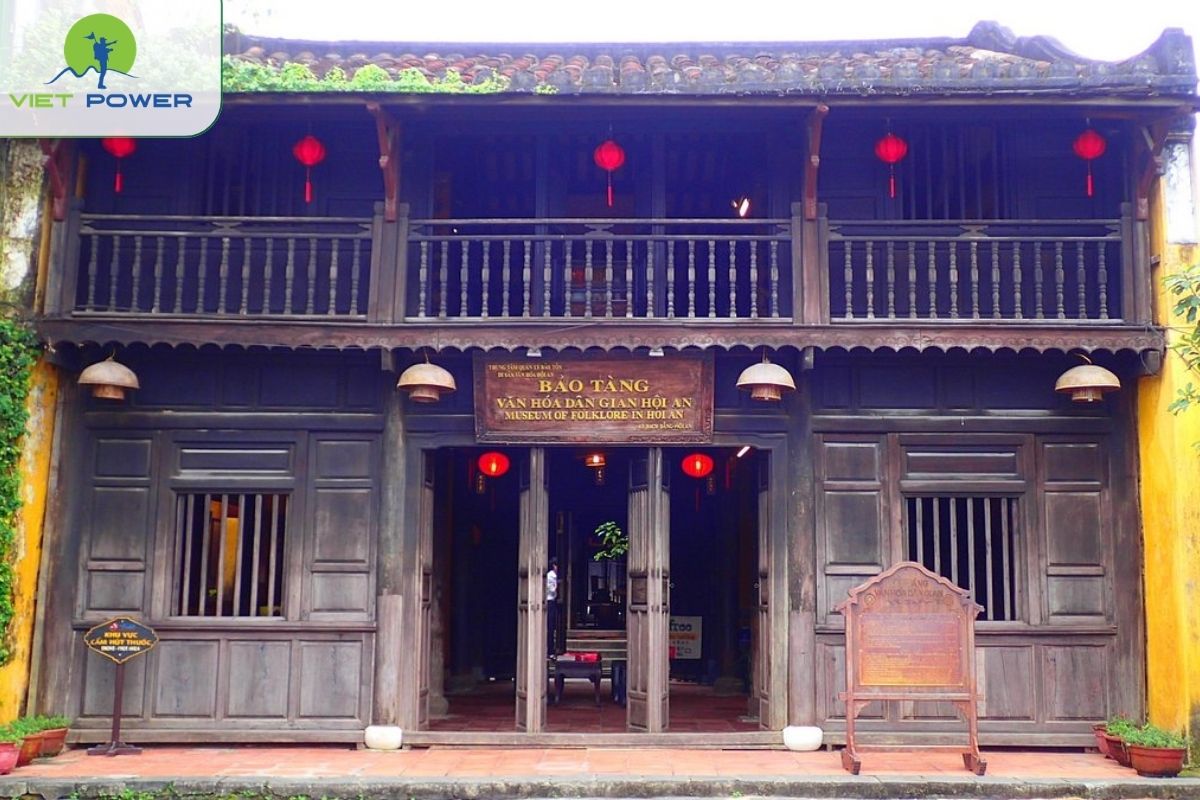
The Hoi An Museum of Folk Culture is a cultural highlight in Hoi An Ancient Town, offering clear insights into local life, traditional crafts, and community customs. Located inside a historic merchant house, the museum presents a wide range of artifacts and exhibits that reflect how people lived, worked, and preserved their heritage over time.
With experience in organizing cultural journeys across Vietnam, Vietpower Travel helps travelers explore destinations like Hoi An in a more meaningful way. By including heritage stops such as this museum in your itinerary, you can gain a deeper understanding of local culture while enjoying a well-planned and enriching travel experience.
The Hoi An Museum of Folk Culture gives visitors a deeper look at the people, traditions, and daily life behind the Ancient Town’s heritage. Set inside a historic merchant house, it presents local culture through artifacts, craft-related displays, and folk traditions.
The museum is located in the heart of Hoi An Ancient Town, making it easy to access during a walking visit. Its central position allows travelers to combine it with other nearby heritage sites without changing their route.
The main entrance is at 33 Nguyen Thai Hoc Street, with a second access point at 62 Bach Dang Street. This two-sided layout connects the museum directly to both a busy heritage street and the riverside area.
The Hoi An Museum of Folk Culture is commonly listed as open from 7:00 AM to 9:00 PM daily.
A detail repeated in many guides is that the museum is usually closed on the 20th day of each month for maintenance or professional work.
Many travel sources describe the museum as part of the Hoi An Ancient Town ticket system. However, some pages still mention direct reference prices, such as 80,000 VND for Vietnamese visitors and 120,000 to 150,000 VND for international visitors.
The best way to explain this is simple: museum access is often included in the Old Town ticket package, but travelers should still confirm the current entrance fee and ticket format on arrival.
A realistic visit time for most travelers is around 30 to 45 minutes. This is enough time to walk through the museum, see the main displays, and understand the key themes of local life, folk art, and traditional occupations.
Visitors who read the exhibit details more carefully or enjoy photography in heritage museum settings may want to spend up to 60 minutes. The old wooden house, interior layout, and artifact displays make it easy to stay a little longer.
Some visitors will usually spend more time than others. This is especially true for:
Museums offer one of the clearest ways to understand Vietnam beyond scenery and food. They give travelers the background behind famous landmarks, explain how different regions developed, and bring together history, art, royal heritage, and local traditions in a way that is easy to follow. For anyone planning a cultural trip, adding a Museum in Vietnam to the itinerary can make other Vietnam Tourist Attractions feel more meaningful.
You can find more posts related to this topic in our Vietnam tourist attractions category. Explore detailed travel guides, destination highlights, and inspiration for your next journey through Vietnam.
The Hoi An Museum of Folk Culture is one of the most meaningful cultural stops in Hoi An Ancient Town, offering visitors a deeper understanding of how local people lived, worked, and preserved their traditions. Located inside a historic merchant house, the museum presents a clear picture of daily life, folk beliefs, and traditional occupations that shaped the town’s identity.
As a Hoi An heritage museum, this space preserves key aspects of traditional life, including customs, occupations, rituals, and community memory. Visitors can explore a wide range of cultural heritage artifacts, from craft tools and costumes to folk art and performance-related objects.
The museum helps explain how Hoi An functioned as a living trading town, where craft villages, river-based livelihoods, and family traditions all played a role. This makes it a strong choice for travelers looking for a traditional culture museum and an educational museum experience in the Old Town.
Hoi An is widely known for its architecture, but this museum highlights the people behind that heritage. It explains the human side of the UNESCO-listed town, showing how traditions were maintained across generations.
Through its exhibits, visitors can better understand local culture in Hoi An, including how identity was shaped by trade, craftsmanship, and community life. For those interested in heritage interpretation and cultural learning, the museum adds real depth to the overall travel experience.
It is also considered one of the more insightful Vietnam Tourist Attractions for travelers who want to go beyond surface-level sightseeing.
Continue exploring similar posts to learn more about Vietnam’s attractions and experiences:
The museum’s collection covers many parts of local life, from art and ritual to craft work and daily labor. This broad range helps visitors understand Hoi An through real objects rather than short descriptions alone.
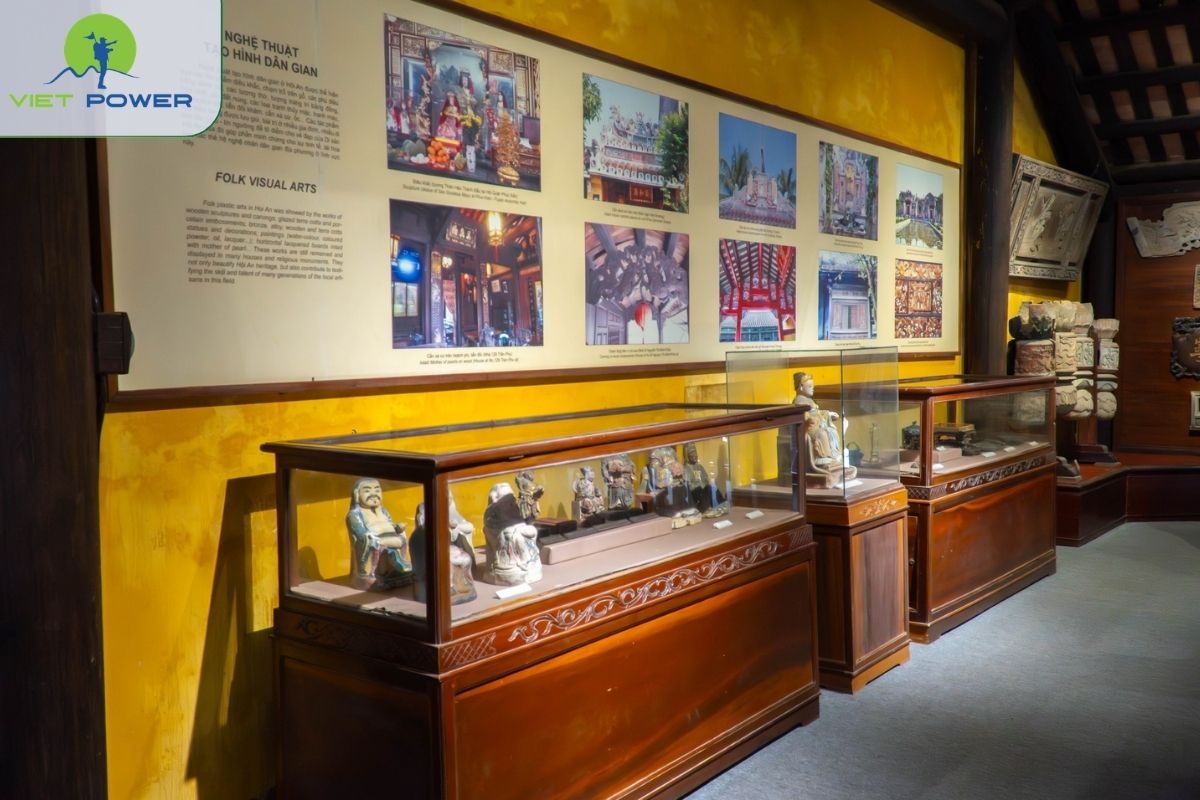
One major part of the museum focuses on folk art and visual culture. Visitors can see wood carvings, worship statues, porcelain reliefs, and objects made from bronze and terracotta. The collection also includes traditional paintings, horizontal boards, decorative panels, and other works connected to local beliefs and artistic taste.
These displays are among the most notable Hoi An cultural exhibits because they show the skill of local artisans and the spiritual side of community life. They also help readers understand why the museum is known for preserving a wide range of cultural heritage artifacts.
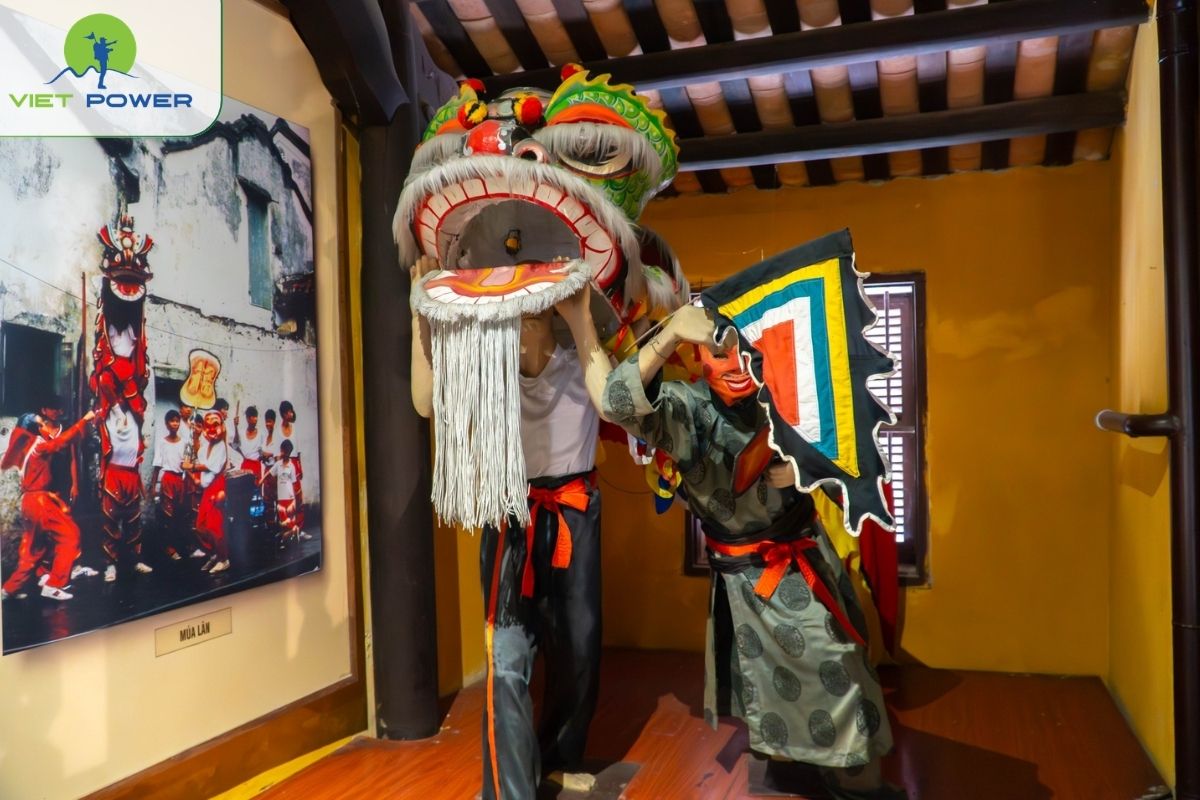
Another key section presents folk performance and ritual culture. The museum introduces Bai Choi, Ba Trao / Ba Dao singing, and Thien Cau / Unicorn dance, all of which are closely linked to community celebrations and local belief systems. Festival objects, performance-related items, and other ritual objects help explain how these traditions were practiced.
This part of the museum collection is useful because it shows culture in action. Instead of focusing only on static art, it reveals how song, dance, and ceremony shaped everyday social life in Hoi An.
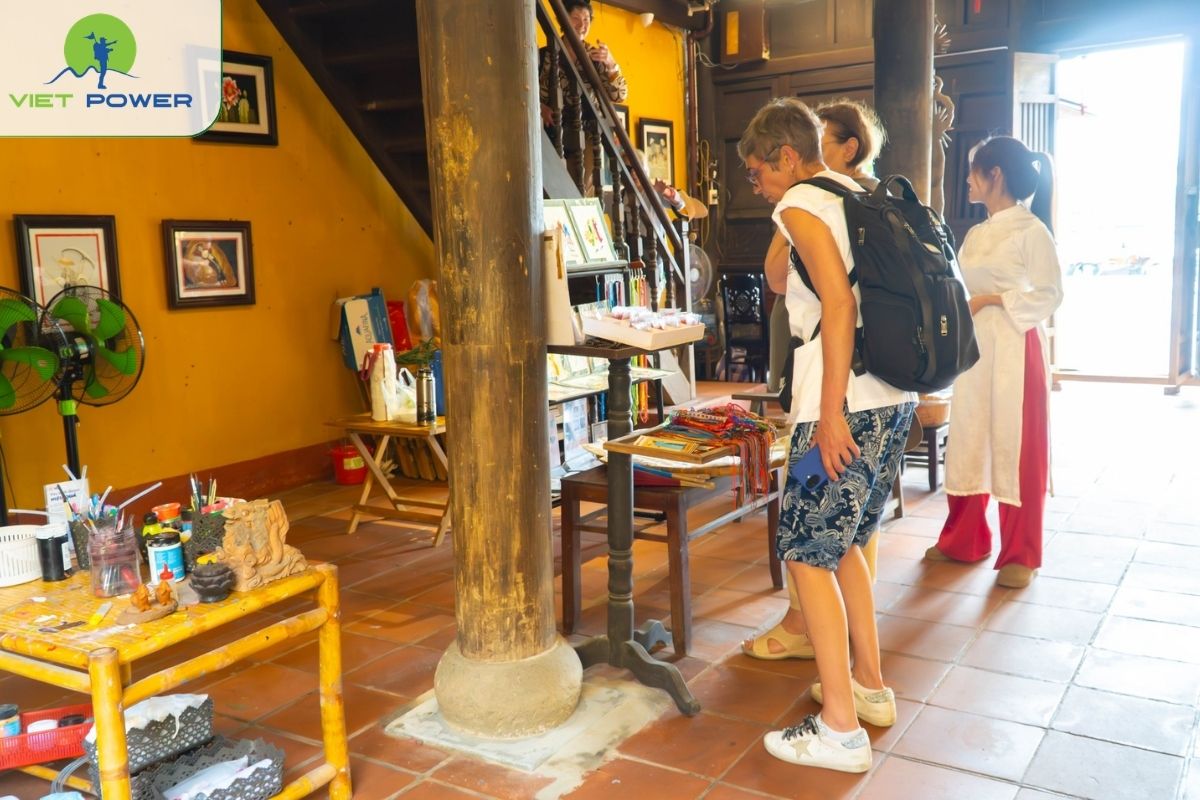
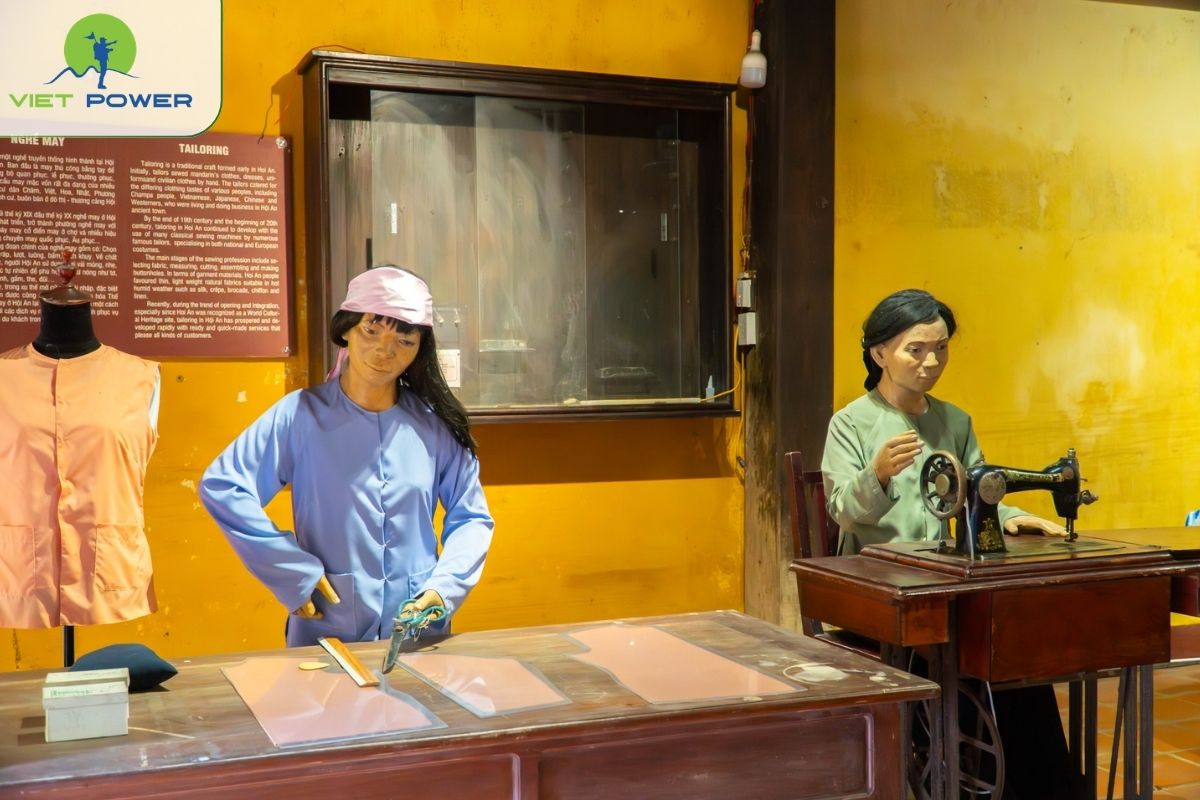
The museum also displays many craft tools and objects connected to village industries around Hoi An. These include weaving looms, tailoring-related items, lantern-making references, pottery tools, carpentry tools, and artifacts linked to traditional medicine and small-scale production.
This section is especially helpful for readers interested in folk crafts Hoi An because it connects local skill with everyday work. It also shows how households and craft villages supported the town’s economy over time.
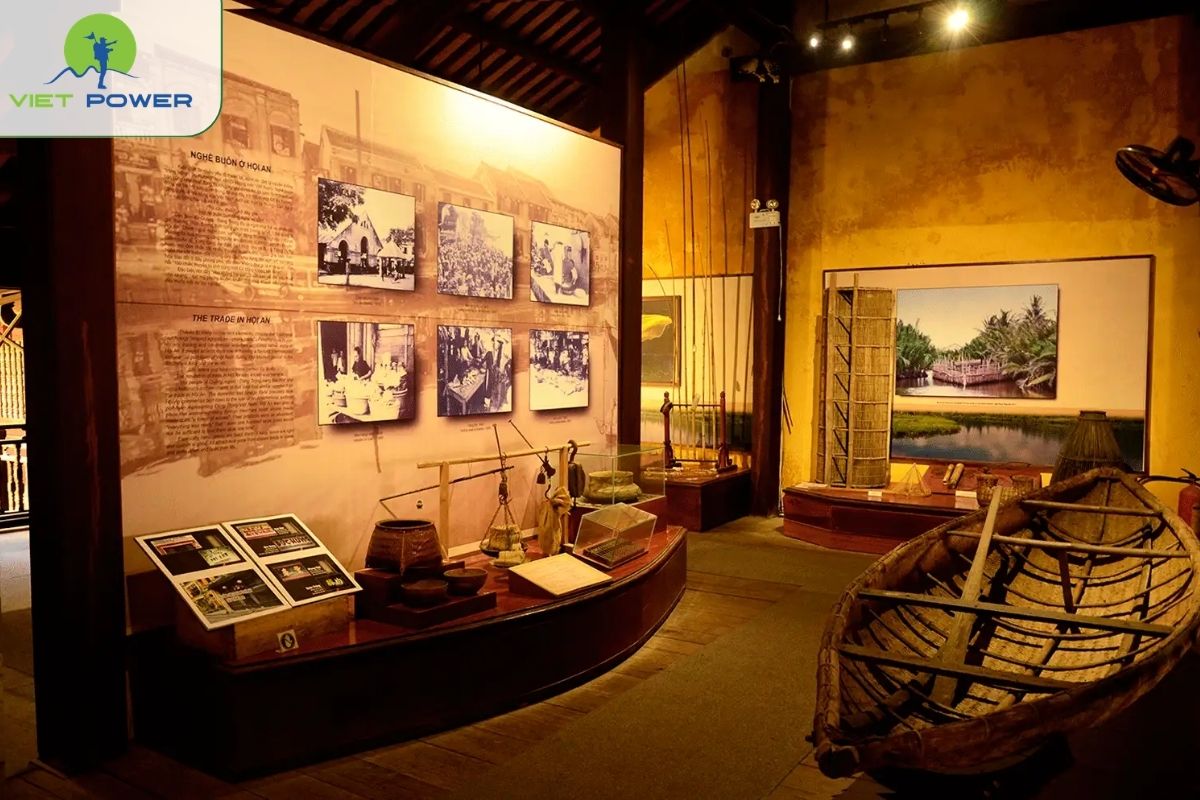
Another group of displays focuses on traditional livelihoods. Visitors can see tools linked to river life, fishing practices, farming work, and food production. These include equipment used in fishing and agriculture, along with objects that reflect local adaptation to the river environment.
This is where the museum connects clearly with traditional fishing culture and local trade history exhibits. The objects show how survival, trade, and labor were closely connected in Hoi An’s past, especially in a town shaped by both water routes and merchant activity.
Discover more posts on the same topic to deepen your travel inspiration:
The museum does more than present old objects. It helps visitors understand how people in Hoi An lived as families, workers, artisans, traders, and members of a cultural community. That makes the visit more meaningful for travelers who want context as well as sightseeing.
The museum connects artifacts with daily life in a clear way. Through its displays, visitors can learn about social customs, local belief systems, occupations, and communal celebrations. The collection shows that Hoi An’s heritage grew from ordinary routines as much as from famous buildings.
This helps readers understand folk customs, working life, and the rhythm of the old town across different generations. It also gives a fuller picture of local identity in Hoi An.
Hoi An’s heritage was shaped by many groups, including merchants, artisans, fishers, farmers, and household producers. The museum explains this through tools, craft displays, and objects tied to production and trade. Visitors can see how village industries and family work supported the town’s role as a port and cultural center.
This section naturally supports the idea of local trade history exhibits because it shows how trade was built on real labor, local materials, and skilled village production. It also explains why community identity in Hoi An is closely linked to occupation and craft tradition.
Visitors can also learn about clothing traditions, wedding customs, and family-based social practices. The museum includes displays related to Chinese–Vietnamese dress, traditional garments, and wedding culture, which reflect the mixed cultural background of Hoi An’s residents.
These objects are valuable as part of social memory because they preserve how people marked identity, family events, and life stages in the past. They also show how cultural exchange shaped local customs in the town.
If you’re inspired to see Vietnam your own way, Vietpower Travel is here to create a journey that fits you perfectly.
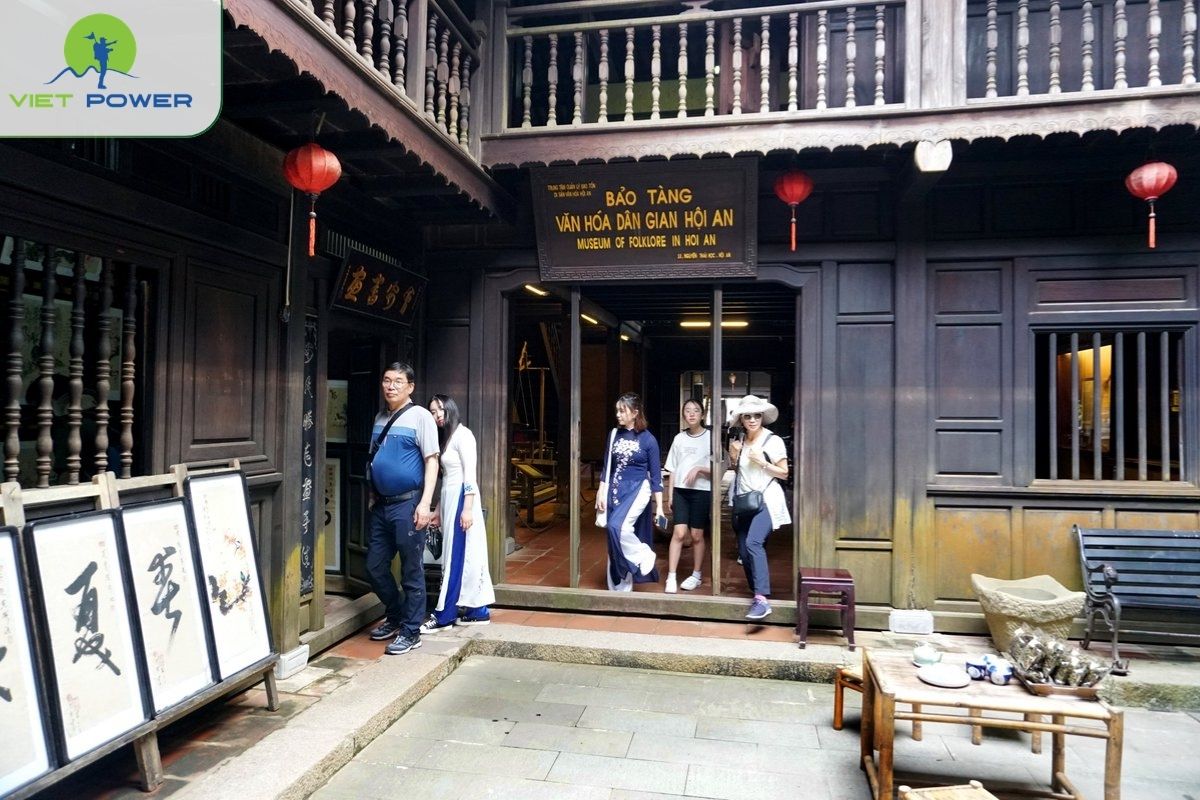
The Hoi An Museum of Folk Culture is a small but rewarding stop for travelers who want to understand Hoi An beyond its famous streets and lantern views. Through its traditional artifacts, folk performances, craft-related displays, and historic wooden house, the museum shows how trade, daily life, and local customs shaped the identity of the Ancient Town.
If you are planning your next journey, let Vietpower Travel inspire you to explore Vietnam and discover more memorable experiences in Hoi An and Da Nang.
Please kindly send us your ideas about the tours: destinations, attractions, your group, hotel class... we will get back to you with details & best offers quickly. Surely, you will feel satisfactory!
 |
 |
 |
 |
 |
 |

.jpg) Customize Your Trip
Customize Your Trip
 Vietnam Tours
 Thailand Tours
 Laos Tours
 Indonesia Tours
 Cambodia Tours
 Myanmar Tours